
Enigma: the machine that seemed unbreakable
How Enigma, the German cipher machine of the Second World War, worked, why it was believed unbreakable and how Polish and British mathematicians managed to read its messages.

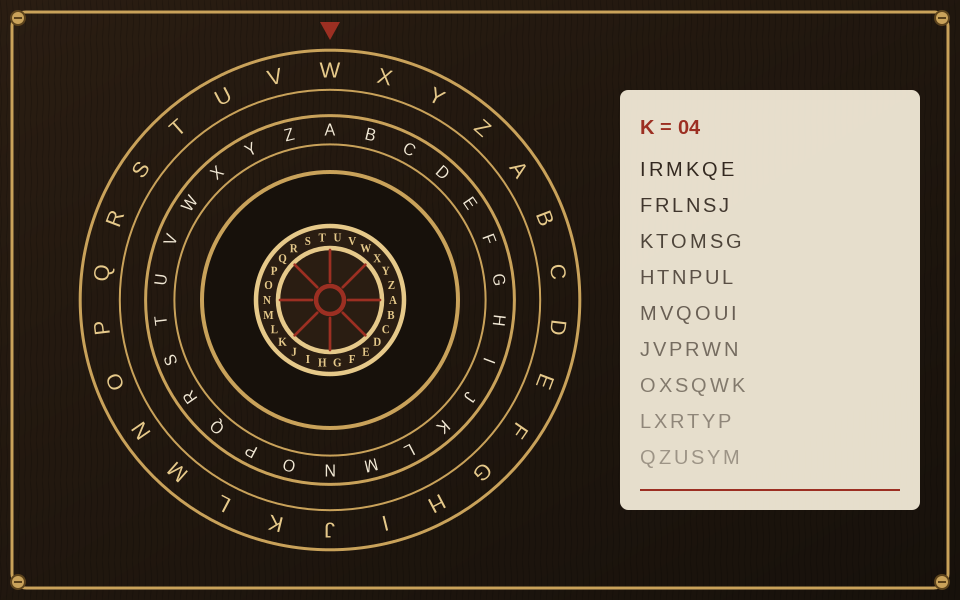
It looks like a typewriter shut in a wooden box: a keyboard, a panel of lamps with the letters of the alphabet, three or four toothed wheels. You press a letter and another one lights up. You press the same letter again and yet another lights up. This is Enigma, the cipher machine with which the German armed forces protected their communications during the Second World War.
Its makers believed it unbreakable, and the numbers seemed to prove them right: in the army version the possible combinations exceeded a hundred billion billion. Yet its messages were read, first by a small group of Polish mathematicians and then, on an industrial scale, by the British codebreakers of Bletchley Park.
Why it is an exemplary case
The story of Enigma teaches a lesson that still holds: the security of a cryptographic system depends not only on the number of possible keys but also on the structure of the algorithm and the procedures with which it is used. Enigma fell through a combination of design flaws, operators’ habits and mathematical insight.
- Rotors
- Wired discs that substitute one letter for another and turn at every keypress.
- Reflector
- Sends the signal back through the rotors: it makes the machine reversible, but prevents a letter from becoming itself.
- Plugboard
- Swaps pairs of letters before and after the rotors, multiplying the combinations.
- Daily key
- Rotor order, ring settings and plugboard connections, distributed on monthly sheets.
For the ciphers that preceded Enigma see the Vigenère cipher and the Alberti cipher disk; for the story of how it was broken, breaking Enigma and Bletchley Park.
The pages of this topic
Enigma: history
From Arthur Scherbius’s 1918 patent to adoption by the German armed forces and the Navy’s four-rotor versions.
Enigma: key figures
Inventors, mathematicians and codebreakers: the people who built Enigma and those who managed to break it.
Enigma: how it worked
The path of a letter inside Enigma: keyboard, plugboard, rotors, reflector and lamps, and the movement of the rotors at every keypress.
Enigma: worked example
An example with the historical wirings of rotors I, II and III and reflector B, to see how the same letter produces different letters.
Enigma: weaknesses and attacks
The reflector, key transmission procedures, predictable messages and operator errors: the cracks through which cryptanalysis got in.
Enigma: legacy
What Enigma left to modern cryptography and to the history of computing: principles, methods and the myth of Bletchley Park.
Enigma today
Museums, simulators, auctions and teaching: where Enigma is found today and why it is still a valuable tool for learning cryptography.
Enigma: frequently asked questions
Short answers to the most common questions about Enigma, how it was broken and Turing’s role.
More topics in this section
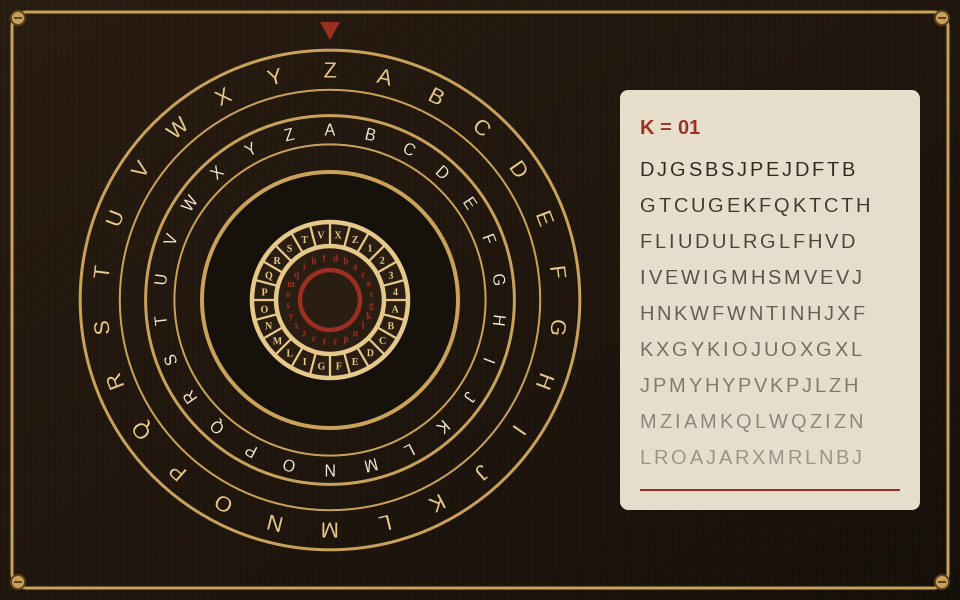
Caesar cipher
The most famous cipher of antiquity: how the three-letter shift works, why it breaks in seconds and what it still teaches today.
9 pages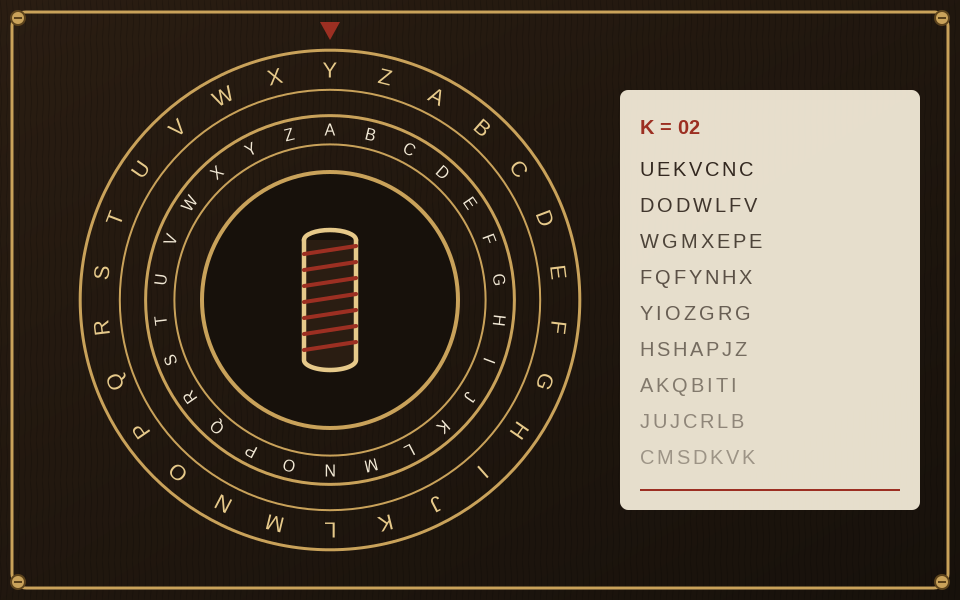
The Spartan scytale
What the Spartan scytale was, how transposition ciphers work, what the ancient sources really say, how it is broken and what remains of it in modern cryptography. With examples and exercises.
9 pages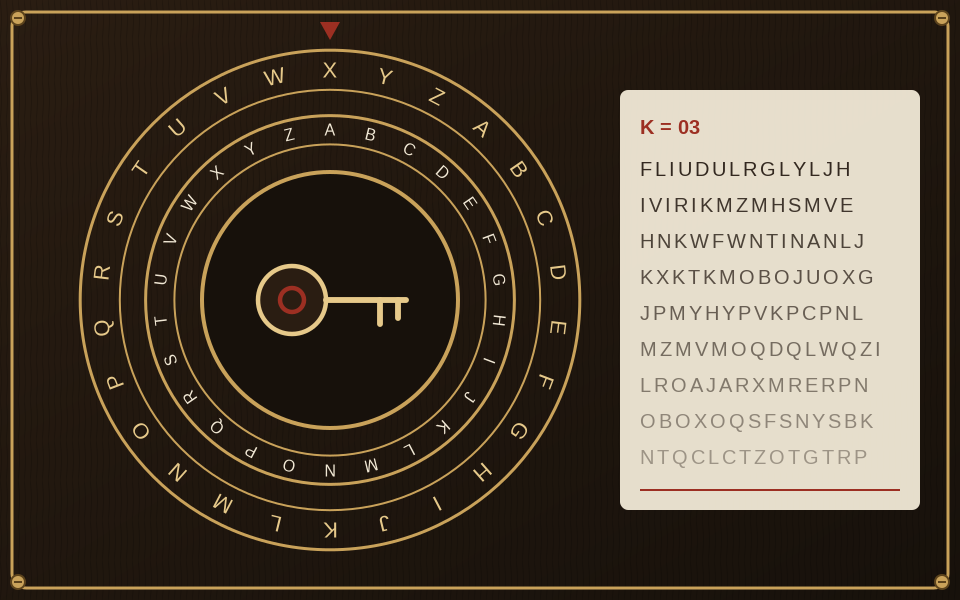
Vigenère cipher
How the Vigenère cipher works — actually devised by the Italian Giovan Battista Bellaso: the table, the keyword, a step-by-step example, the maths, the Kasiski method that broke it and an exercise.
9 pages